



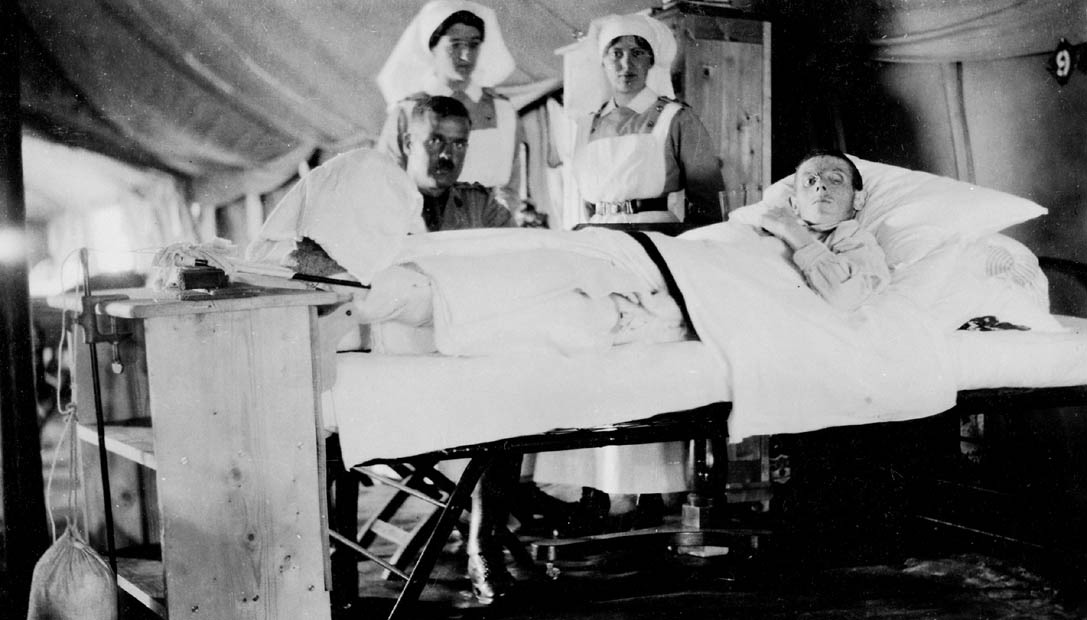

The BlueBirds- Canada's Nursing Sisters
Canada’s Nursing Sisters were among the earliest women to serve as fully integrated members of the Canadian military. By the First World War, they held military rank and served in hospitals, casualty clearing stations and other medical units at home and overseas. Their distinctive blue uniforms and white veils earned First World War Nursing Sisters the affectionate nickname “Bluebirds” from wounded soldiers.
More than 3,100 Nursing Sisters served with the Canadian Army Medical Corps during the First World War, including more than 2,500 overseas. Their professionalism, discipline and courage established a military nursing tradition that expanded considerably during the Second World War.
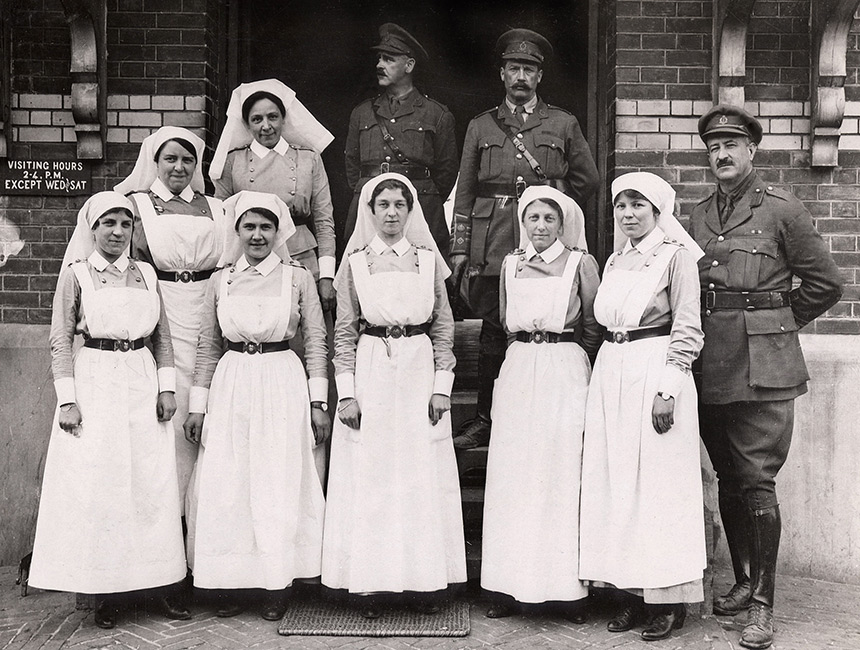
Canadian Nursing Sisters were notable not only for their medical expertise, but also for their military status. They held rank, served as commissioned officers and received pay tied to that status, distinguishing them from many other Allied military nurses.
During the Second World War, 4,480 Canadian Nursing Sisters served: 3,656 with the Royal Canadian Army Medical Corps, 481 with the Royal Canadian Air Force Medical Branch and 343 with the Royal Canadian Naval Medical Service.
Overseas, they served in Britain, the Mediterranean, Italy and Northwest Europe. In casualty clearing stations, mobile surgical units and general hospitals, often close to the fighting, they treated severe wounds and worked with advances in wartime medicine including blood transfusions and antibiotics.
Serving near combat zones meant danger was never far away.
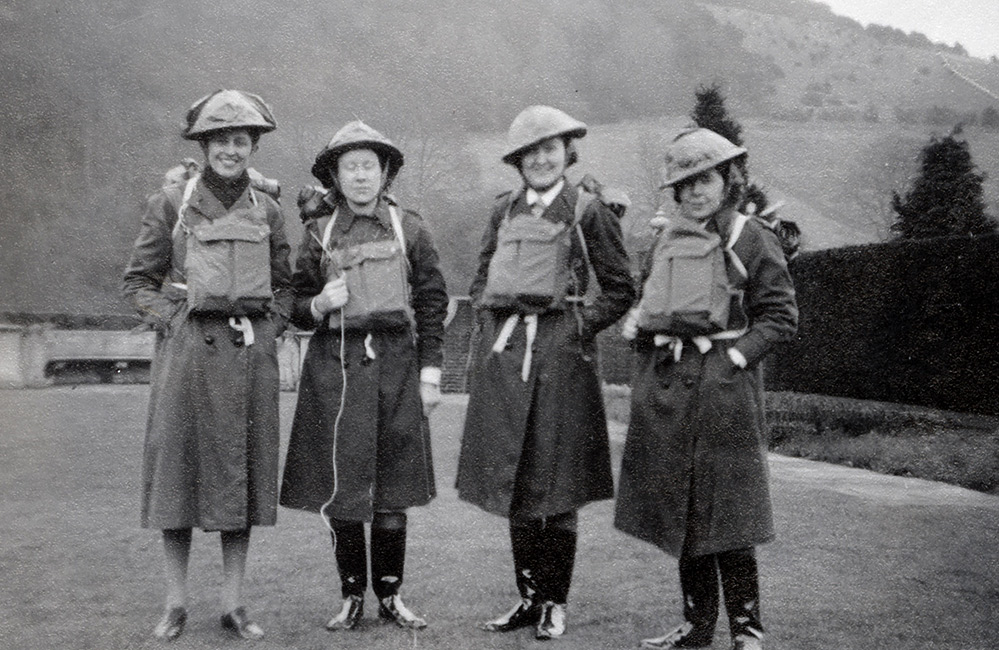
One of the most difficult chapters in the history of Canada’s Nursing Sisters came in 1941, when Kathleen “Kay” Christie and Anna May Waters accompanied Canadian forces to Hong Kong. After Japanese forces captured the colony, both women became prisoners of war.
Even in captivity, Christie and Waters continued caring for wounded Canadian soldiers under extremely difficult conditions. After roughly two years as prisoners, they were returned to Canada as part of a prisoner exchange.
Their experience in Hong Kong was exceptional, but it was not the only way Canadian Nursing Sisters served close to the front.
In Europe, they followed the Allied advance and helped sustain the medical system supporting Canadian forces.
Canadian Nursing Sisters did not land with the assault troops on D-Day, June 6, 1944. The first two Canadian Nursing Sisters arrived in Normandy on June 19, when Dorothy Irene “Molly” Mulholland and Winnifred “Pit” Pitkethly landed at Bernières-sur-Mer with No. 2 Royal Canadian Air Force Mobile Field Hospital.

Other Canadian casualty clearing stations and general hospitals soon followed. As Canadian forces advanced through Normandy and Northwest Europe, Nursing Sisters moved with them, treating wounded soldiers close to the battlefield.
Their work was essential to sustained military operations.
They did not simply accompany the armed forces. They helped keep those forces functioning by treating the wounded, applying modern medical techniques and helping soldiers survive injuries that might once have been fatal.
Across two world wars and later conflicts, Canada’s Nursing Sisters demonstrated that military service could take the form of healing as well as fighting.
They were military officers, medical professionals and members of the Canadian war effort who served under dangerous conditions, endured captivity and helped transform battlefield survival into recovery.
The First World War “Bluebirds” helped establish that tradition. The Nursing Sisters who followed carried it forward through the Second World War and beyond, securing a lasting place for military nursing in Canada’s armed forces.

Learn More: https://mural.themilitarymuseums.ca/panels/row10/200-nursing-sisters