


.webp)

Library and Archives
.png)
- Navigate
TMM Library and Archives
TMMLA was established in 2000 in a partnership agreement between the University of Calgary and the Department of National Defence.

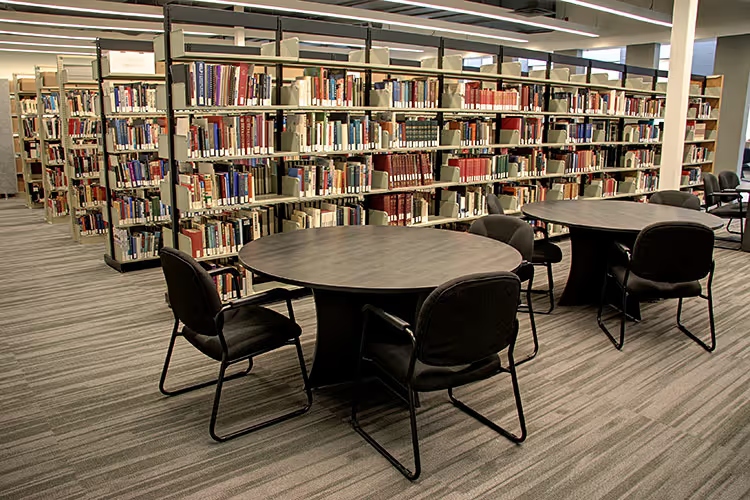
The Military Museums Library and Archives (TMMLA) is the largest non-governmental military library in Canada. The library is open to everyone and there is no cost for its use (please advise TMM guest reception if you wish to only visit the Library and Archives; admission will be waived).
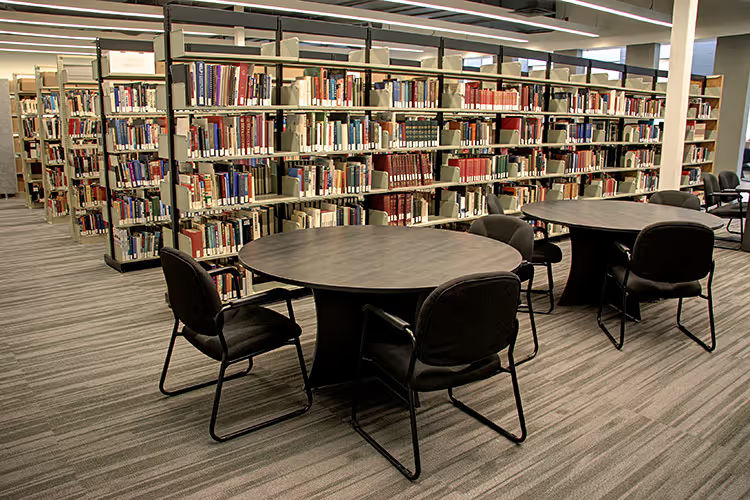
Holdings in monographs range in date from the mid 17th century through to modern times and include large selections of French and German material. There are more than 40,000 circulating volumes and an additional 70,000 volumes in special collections that do not circulate but that can be consulted in the TMMLA reading room. In addition, there are hours of oral histories that can be accessed in the library including interviews with WWI, WWII (including CWAC), and Korean War veterans.
The University also maintains more than 1 kilometre of archival material related to the military history of Alberta. These materials attest to major military and policing personalities, events and issues that have helped shape the evolution of the Canadian West.
Hours of Operation
*For temporary or seasonal closures see the University of Calgary website.
Using the Library
Access to Library and Archival Materials
Searching the Collection
The collection is catalogued and searchable through the main University of Calgary library catalogue.
Tip: You can enter any subject in the main search box on the home screen. You can then limit the results to The Military Museums Library and Archives by choosing it as a limiter on the left side of the screen.
Tip: If you can’t find what you are looking for try the chat feature to help you or be put in contact with a librarian specialized in the subject you are researching.
Tip: Viewing of either archival or rare book materials requires an appointment, which can be made by contacting us at least 24 hours in advance of your visit: asc@ucalgary.libanswers.com
Tip: Oral histories are located on a standalone PC without internet access in the library. You can browse that PC to find the individual interviews.
Borrowing Materials
The public is welcome to borrow materials as well as use them onsite. To borrow materials you will need a University of Calgary Library card, Alumni card, a Community Borrow card. For more information see the University of Calgary website.
Highlights and Area Strengths
The Chicksands Collection
The backbone of the University’s military holdings is the Chicksands collection, housed at TMMLA. Named for an ancient monastery and cold-war “listening post” where the books were held prior to coming to Calgary, this material comprises the bulk of the former UK War Office library. Collected by British military attaché between 1650 through the cold war, the library was a closed resource and a primary point of access for grey intelligence on the enemies and allies of the British Crown.
The Chicksands collection is catalogued and searchable through the main library catalogue for the University of Calgary.
Western Canadian Experience: WW I, WW II
Archival collections are comprised of many small, intimate, fonds of soldiers who experienced life in the field during Canada’s involvement in major international conflicts. These include the fonds of important officers such as Major General David Watson, who led the Canadian 4th Division at Vimy Ridge, and Brigadier William Smith Ziegler, who led on the Allied Control Council in post-WW II Germany. The archives also include the fonds of many non-career military service members whose records shed light on less well-examined aspects of military history.
Notable examples include the fonds of WW II nurse Norma Stowe, who served primarily in South Africa, and the fonds of James Reid, logger and soldier in the 50th Battalion during WW I.
Major General David Watson fonds
Brigadier William Smith Ziegler fonds
Norma Stowe fonds
James Reid fonds
North-West Mounted Police
Military collections include a significant amount of material related to the formation and activities of the North-West Mounted Police (NWMP) from the time of its inception in 1873 through to 1920 when the force was amalgamated into the Royal Canadian Mounted Police. NWMP members were active and instrumental in domestic conflicts and were later absorbed into important and early western military regiments such as the Lord Strathcona’s Horse and the Canadian Mounted Rifles.
Fred Bagley fonds
William Parker fonds