



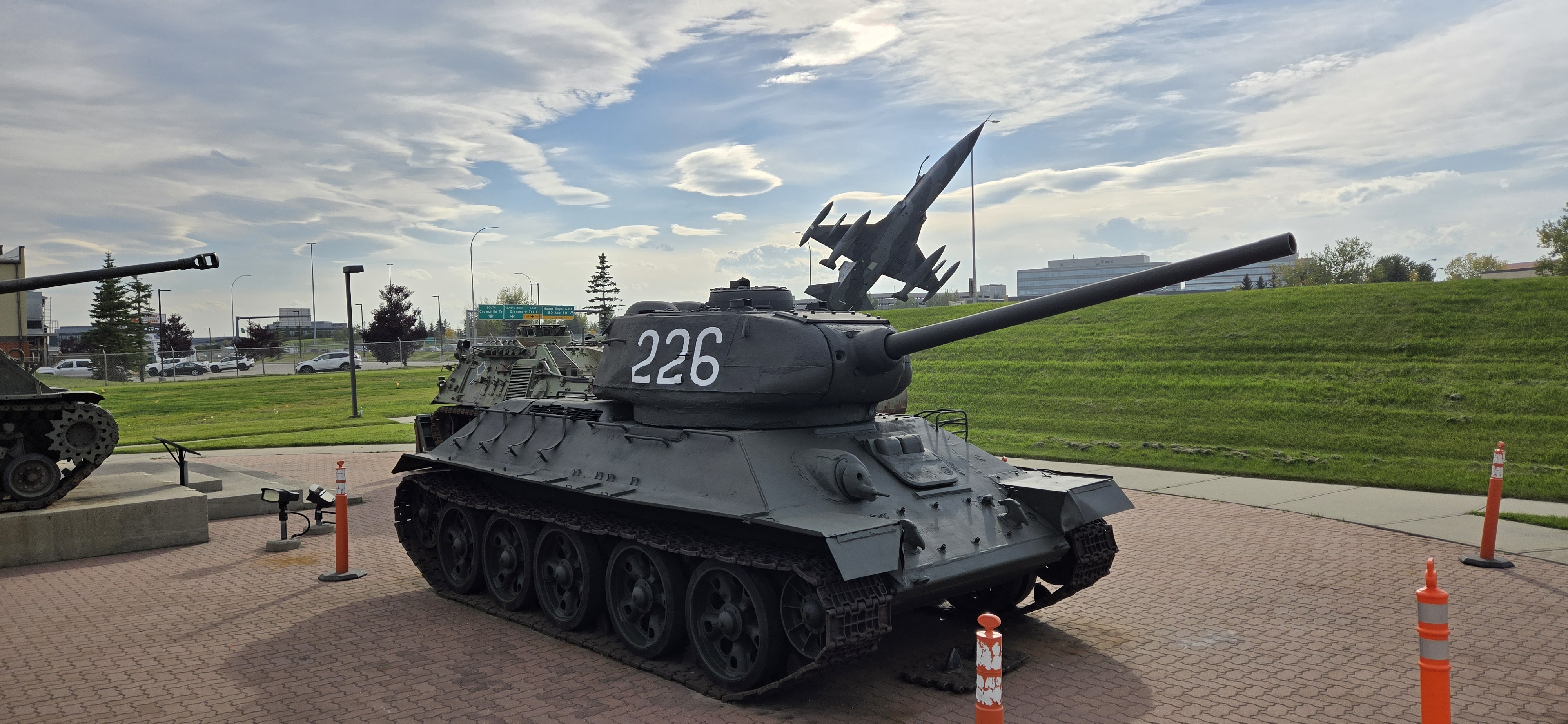

Restoring TMM’s T-34/85: A Tank With a Cold War Story
A tank’s armour is designed to protect its crew from gunfire and explosions, but even armour cannot escape the effects of time.
The Military Museums’ Soviet-built T-34/85, a design that emerged during the Second World War, had spent years outdoors with its paint flaking and steel showing signs of corrosion. The tank had reportedly been used as a public monument in Europe before being acquired by Canada following German reunification and eventually transferred to The Military Museums’ tank park.
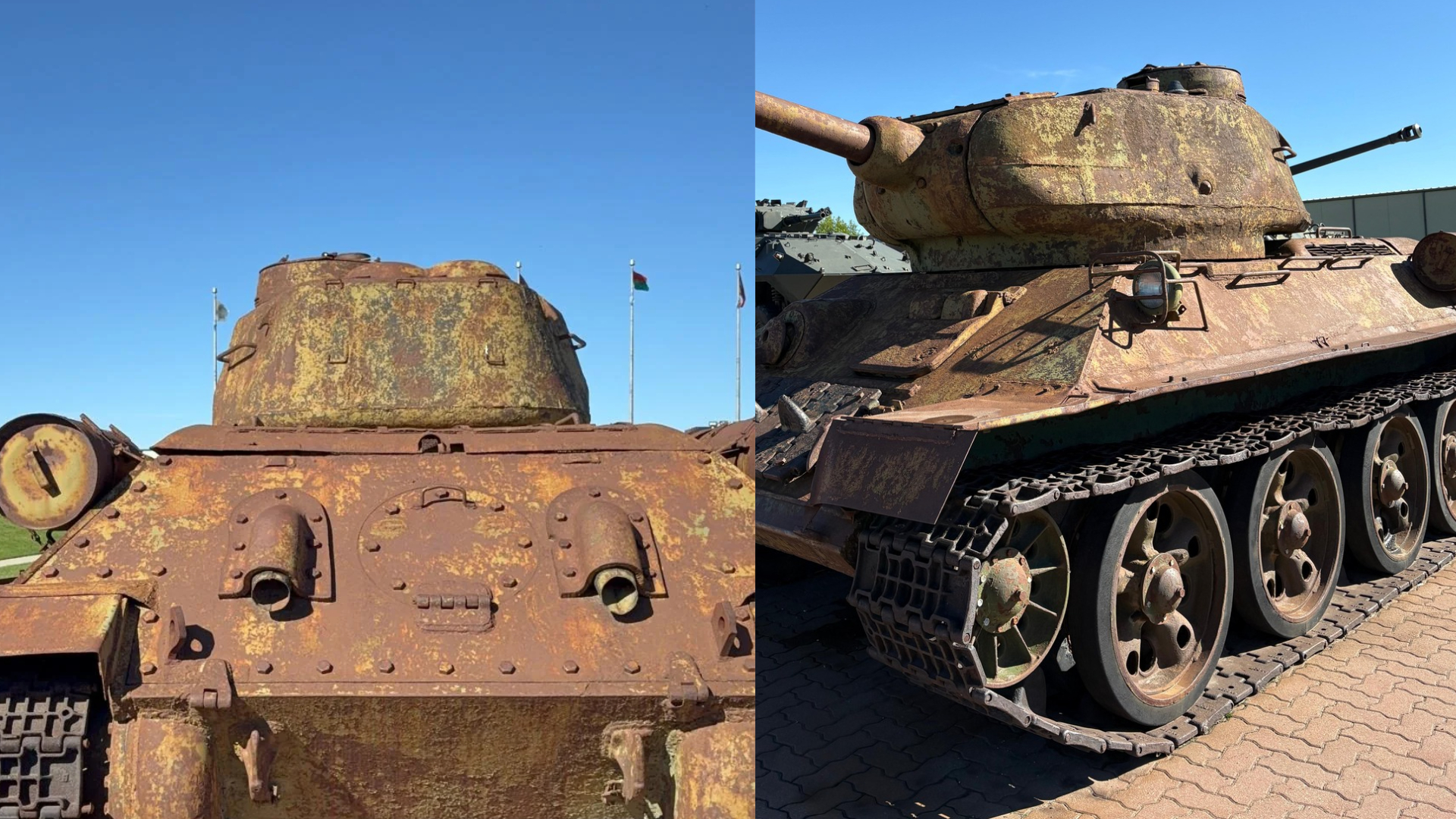
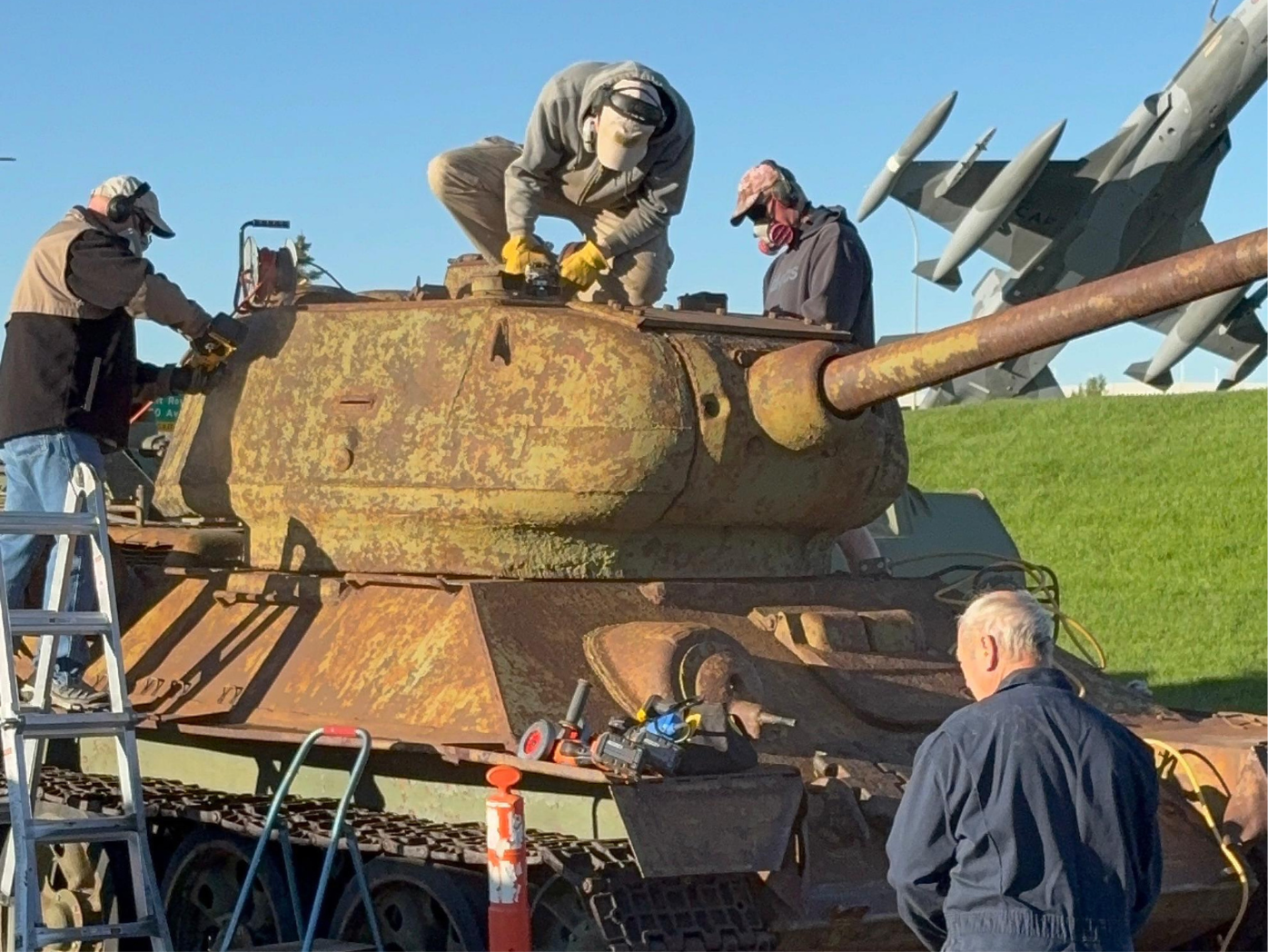
In September 2026, TMM staff and volunteers spent five days restoring the T-34/85 to a fresh, parade-ready condition.
The project was about more than appearance. The goal was to use the tank to tell a broader Cold War story, including the role the T-34 played in conflicts involving Canadian forces.
The T-34 – History
The Soviet designed T-34 tank is most popularly known for its Second World War service on the Eastern Front. Early in its service life, the T-34/76, with its 76mm gun, slowed the German advances of Operation Barbarossa in 1941. Featuring thick, sloped armour, the T-34 was impervious to all but the largest guns available to the German Army in 1941. However, the early T-34s suffered from poor crew ergonomics, including an overworked 2-man turret with virtually no outside visibility.
By 1944, the upgraded T-34/85 featured a substantially upgraded 3-man turret, larger 85mm main gun, and improved visibility and armour. No longer forced to operate the main gun, the crew commander was freed to command the tank from an officer’s cupola that allowed for better situational awareness and control.
A Canadian Connection
Despite its strong association to WWII, the T-34’s service would continue long after the war. As one of the most mass-produced tanks in history, the T-34 continued to serve around the world in communist aligned forces. 1 These tanks would serve in some of the hot conflicts of the Cold War, and they were sometimes on the opposing side of Canadian troops.
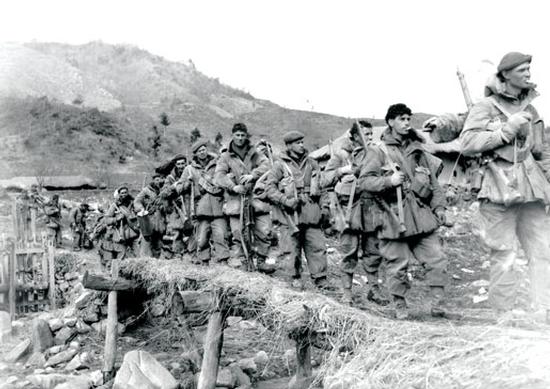
One of these conflicts was the Korean War (1950-1953), where the T-34s of the North Korean People’s Army (KPA) spearheaded the invasion against little opposition. At 0600h 25 June 1950, a force of roughly 110,000 soldiers and 126 T-34/85 tanks crossed the 38th Parallel into South Korea. Opposing them was the South Korean Republic of Korea (RoK) forces, ill-led, ill-trained, and ill-equipped army one third their size. Fearing this was part of a larger attack as part of the Cold War, Canada, as part of the UN, participated in the intervention. 2 21,940 Canadians would serve overseas in the Korean War throughout its duration. Of those, 301 would be killed in action.3
UN forces would bring with them with them tanks that could match or outmatch the T-34s and in overwhelming numbers. The M4A3E8 Sherman tanks, the most commonly used example in US [and Canadian] use were of roughly equal terms. Both the Sherman and T-34-85 were able to penetrate each other’s armour at regular combat ranges, though US inspections showed that 75% of T-34/85 crews were killed when hit by tank fire, whereas that number was a mere 18% for US crews. 4 Despite similar specifications, Russian and Soviet tanks had vastly different provisions for the survival of their crews – a trend that continues to today.
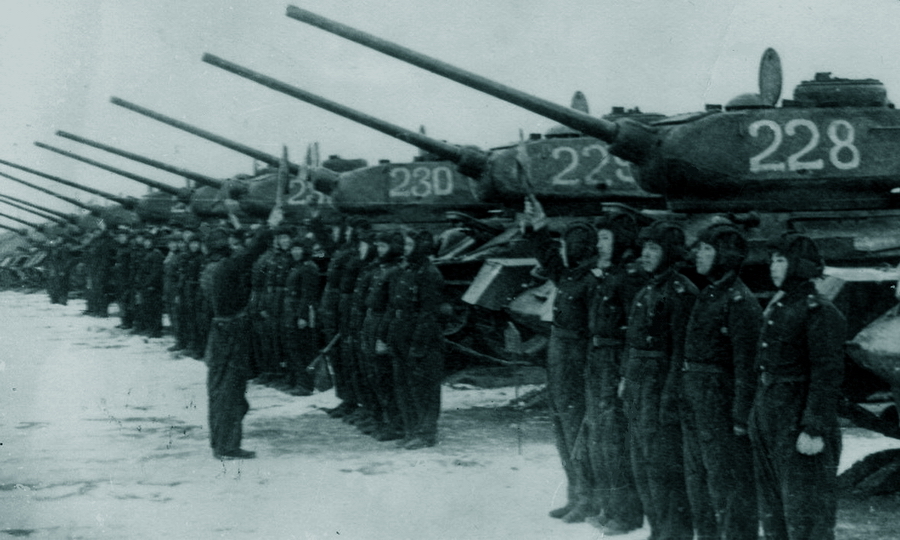
T-34s would continue to show up in conflict zones around the world during the Cold War and beyond. As late as the 1990s, Canadian troops reported seeing these tanks used by local factions in limited roles during peacekeeping operations in former Yugoslavia.
Why represent the opposition?
The Military Museums does not only preserve the equipment used by Canadian forces.
Understanding the equipment used by opposing forces helps explain the challenges Canadian soldiers faced and provides important context for why Canada became involved in conflicts such as the Korean War.
The T-34/85 was central to the opening phase of that war. North Korean armoured forces helped drive South Korean and United Nations troops deep into the peninsula before UN forces were able to stabilize the situation and counterattack.
Interpreting an opposing tank allows visitors to understand the conflict from a broader perspective.
TMM’s restored T-34/85 is painted in Soviet olive drab and carries the number 226.
The number does not represent a specific surviving North Korean tank. Instead, it follows the style of markings associated with North Korean armoured formations during the early stages of the Korean War.
Presented this way, the tank helps tell the story of the North Korean armoured force that shocked the international community in 1950 and contributed to the United Nations response that ultimately brought Canadian soldiers, sailors and air personnel into the conflict.
From Restoration to Interpretation
The restoration of TMM’s T-34/85 preserves more than a piece of military technology.
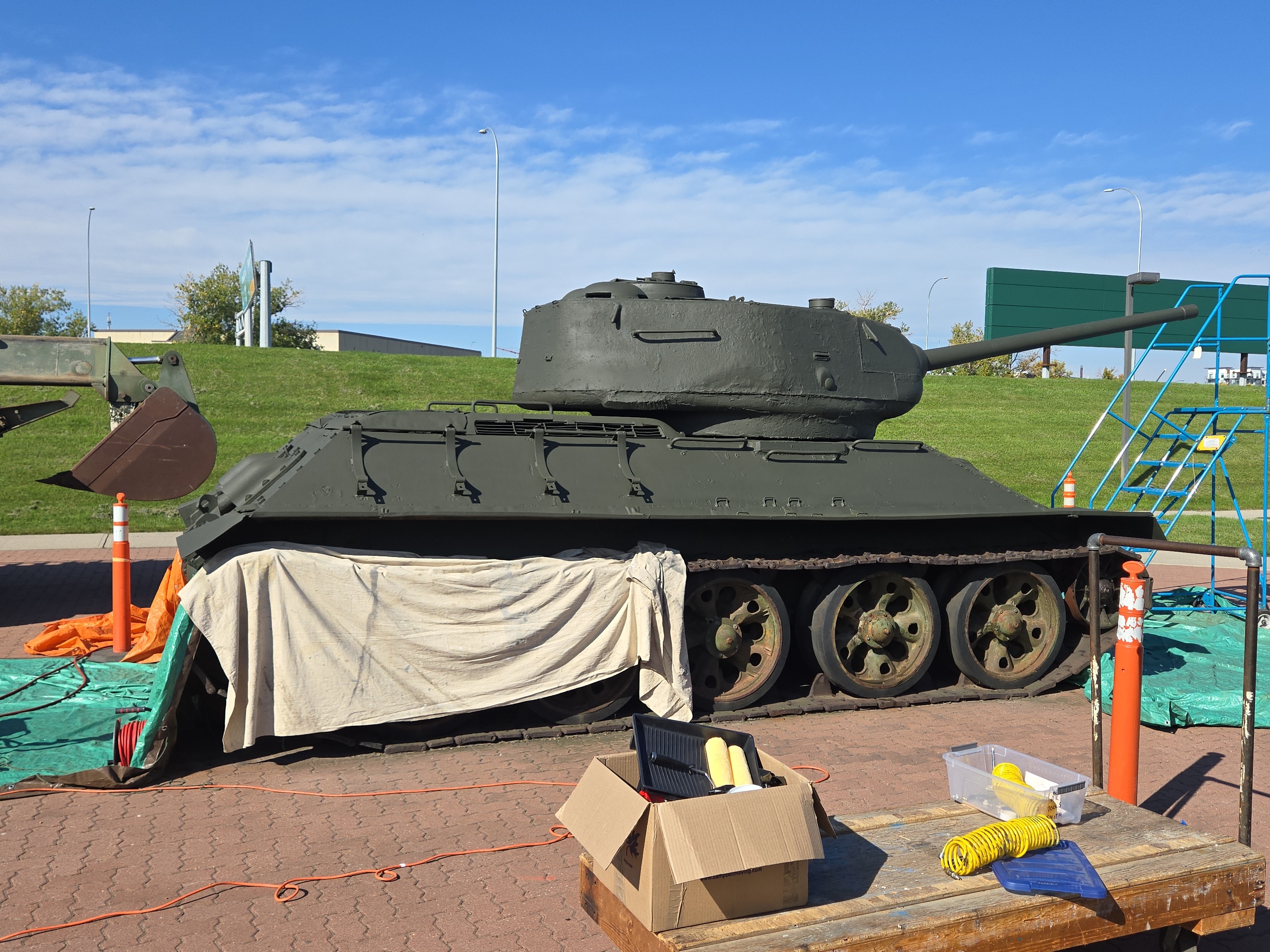
It provides an opportunity to connect the Second World War origins of one of history’s most recognizable tanks with its continued use during the Cold War and with Canada’s own military experience in Korea.
Visitors can now see the restored “226” T-34/85 on display at The Military Museums.
And this will not be the museum’s last tank restoration.
More restoration projects are planned, giving visitors new opportunities to see how the vehicles in TMM’s collection are preserved and how their stories connect to Canada’s military history.
1. As many as 80,000 T-34’s were manufactured, second only in number to its successor, the T-55.
2. Department of History and Heritage, Canada and the Korean War, (Ara Kermoyan, 2002), page 19-20.
3. Department of History and Heritage, Canada and the Korean War, (Ara Kermoyan, 2002), page 150.
4. Stephen Zaloga, T-34-85 Vs. M26 Pershing (Osprey Publishing, 2010), page 74-75.