.webp)

.png)
Army Museum of Alberta
Army Museum of Alberta Collections
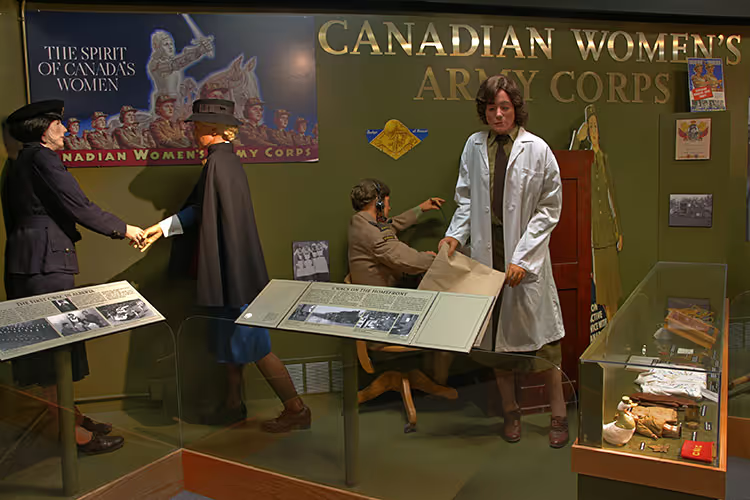
The collections of the Army Museum of Alberta include strong components related to German prisoners of war (POWs) held in Alberta during the Second World War, and a large collection of Canadian Women's Army Corps material from the Second World War. Many objects and stories from both of these components are presented in the gallery.
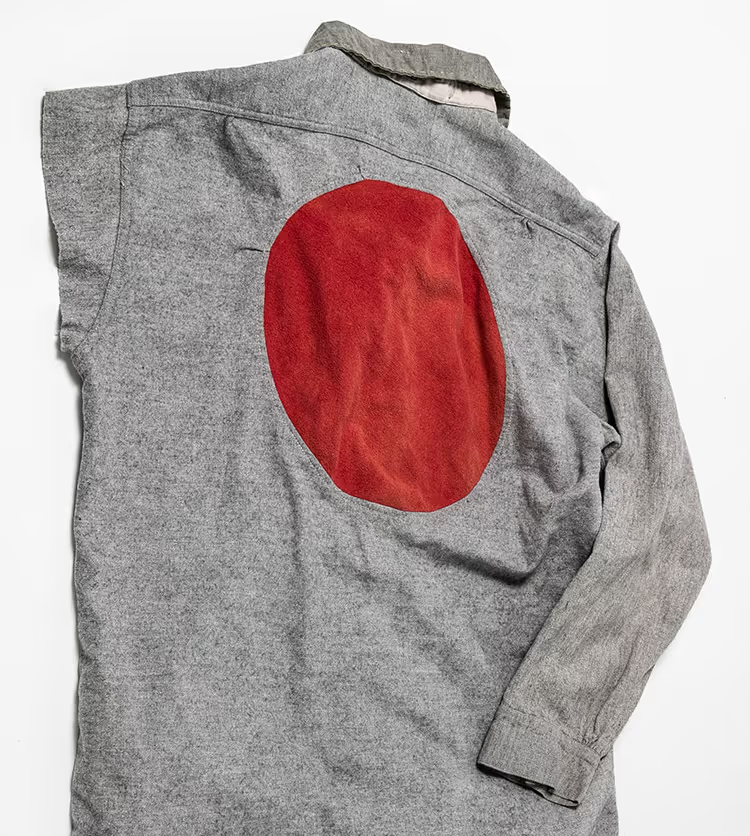
Alberta housed approximately 24,000 German POWs during the war, which was a major part of Canada's contribution to the war effort. Most were housed in two large camps at Ozada (later moved to Lethbridge) and Medicine Hat.
Evolving provincially out of the Alberta Women's Service Corps, the Canadian Women's Army Corps grew to over 21,000 women all over Canada during the war, nearly 2000 of which served overseas.
Some of the highlights of the gallery include:
- Items related to Major General Sir David Watson, commander of the 4th Division during the First World War
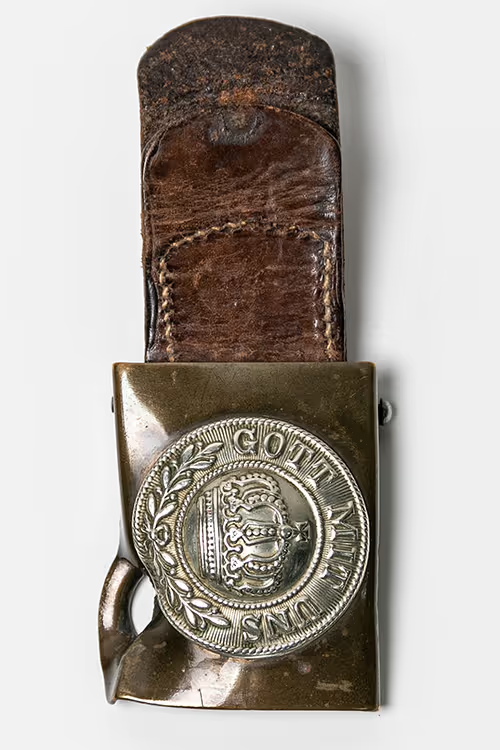
- A German belt buckle taken as a souvenir by a Canadian which later stopped a bullet and saved his life during the First World War
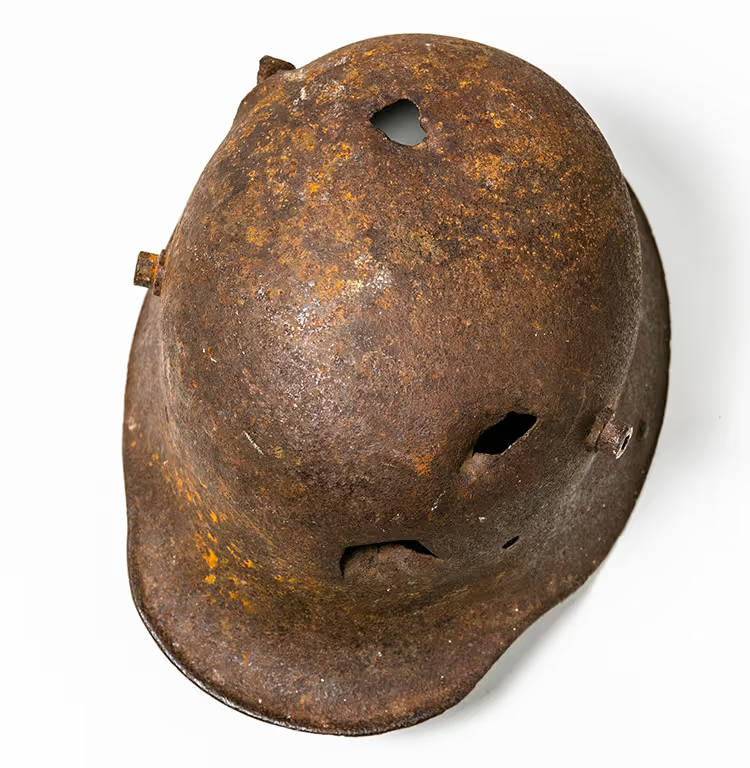
- A German helmet with shrapnel holes excavated from the First World War Vimy Ridge battlefield
- The story of Mike Mountain Horse, an indigenous First World War veteran who had his wartime experiences painted on a traditional story robe after he returned
- Shrapnel from a V-1 rocket that lodged in the wall over the bed of a member of the Canadian Women's Army Corps in Antwerp during the Second World War
- The cap of Brigadier John “Rocky” Rockingham, commander of Canadian ground forces in the Korean War,
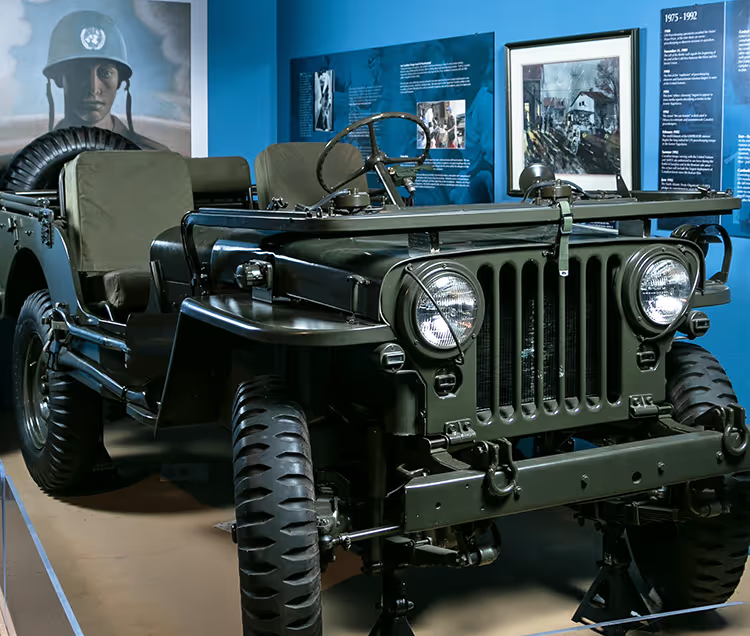
- A mint condition 1952 M38 CDN jeep made in Canada, sent to Korea at the end of the Korean War, then returned to Canada and restored to mint condition
- Items related to Lloyd Hamilton, a Metis veteran from Calgary who saved 60 orphans in the Korean War
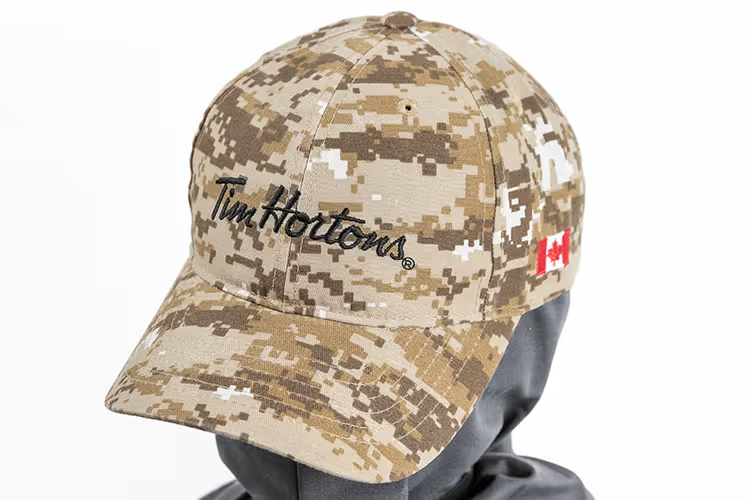
- Tim Horton's caps and other items from the Tim Horton's in Kandahar, Afghanistan
The Fall of '44
The Fall of '44 is the exhibit that dominates the foyer at the entrance to The Military Museums. This exhibit commemorates the battles and intense fighting that Canadian troops were involved in during the last phases of the Second World War in Italy and Europe, and especially highlights the mutual cooperation that developed between the armoured regiments and their supporting infantry.
This close coordination was vital in operating effectively in battle zones such as the confining streets of towns and villages, where the infantry would often be required to travel with the tanks to protect them from bazookas and other projectiles, from which the tanks were particularly vulnerable.
Similarly, the infantry was dependent on armoured support to help concentrate fire on targets they identified. Working together, the tanks would be able to provide continuous covering fire to enable the infantry to close on their objectives.
Urban warfare was a grueling ordeal for soldiers, where their progress was often measured a room at a time, and when rubble in the streets barred the progress of tanks, soldiers often had to clear out defenders on their own without armoured support.
Canadian soldiers made particularly innovative use of explosive charges and grenades to create openings in walls to quickly enter and clear out a building. But it was extremely dangerous work, and snipers, booby-traps and determined counter-attacks took their toll.
The hazards of combat meant that there were many casualties during battle, and when a soldier was wounded, a fellow soldier would normally apply a field dressing to the wound until the Medic arrived with his first aid kit. Then the injured soldier would be moved to a Regimental Aid Post for further treatment, and if the wound was more serious, then they could be evacuated to a Field Hospital. Medics were well regarded by their units for the vital role they played, and were often the difference between life and death for many injured soldiers.